Friday, July 15, 2022
Week 9 - Interesting Information
Friday, July 8, 2022
Week 8 - Detestable Desecration?
There is not much to report on this week. Lisa and I continued to go through the files we grabbed last time we were at the site, documenting them to help make an inventory for the collection. Since Lisa made the really cool document for sorting our information, I have also been working to transfer the information I wrote down about my initial file folders into her format.
We plan to meet next week on Monday to get more file folders and discuss the quantities and necessities of the items we put on that list with Patrick.
Other than the basics, we have also been planning for the Internship Showcase coming up in August. We both chose time slots that work for us - our current idea is to discuss how we came up with making an inventory, our current methodology, some interesting tidbits we have read, and hopefully tie it all to public history in the end. We will start fleshing out the presentation on Monday!
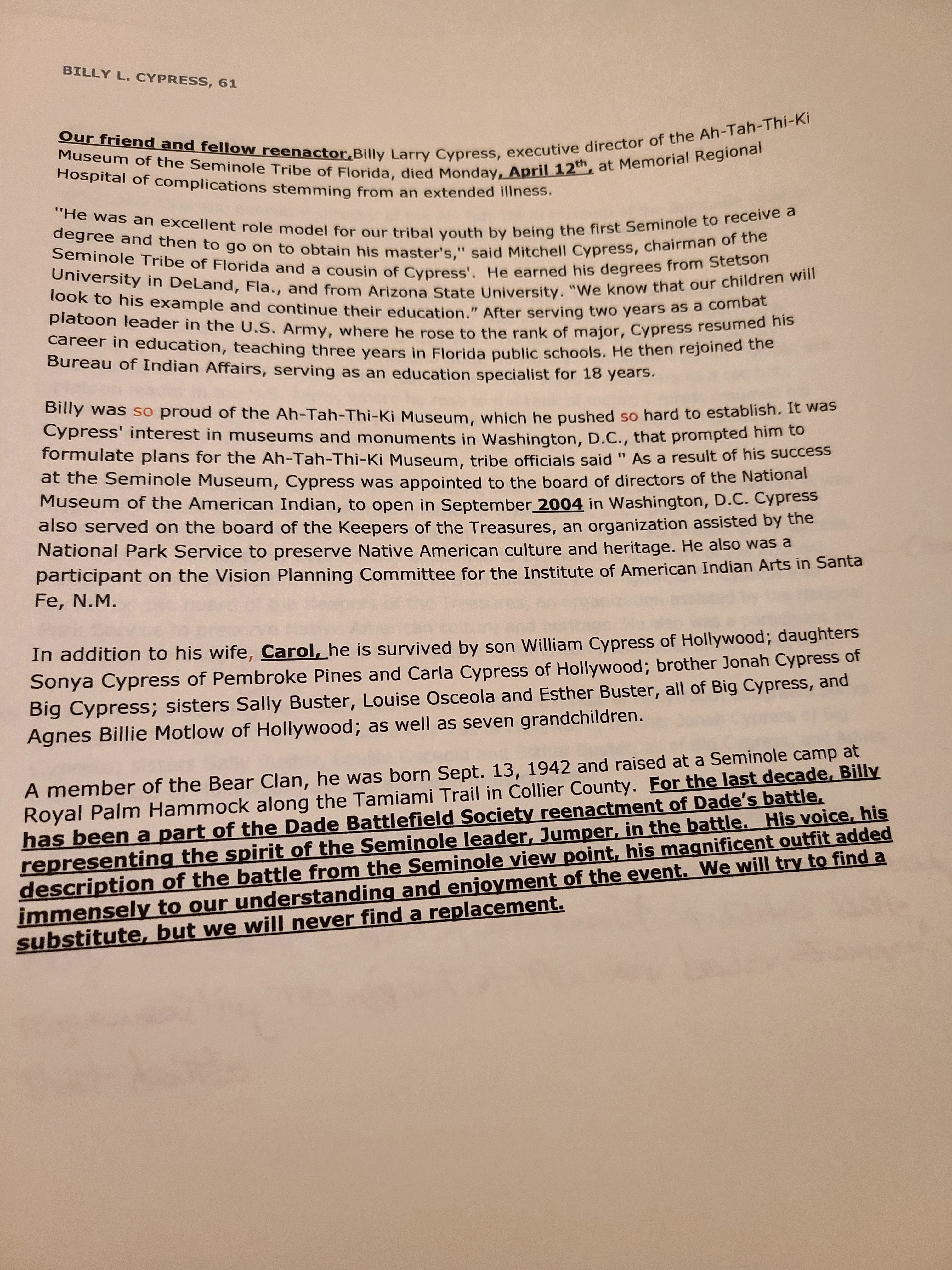
The files this week were full of interesting stuff:
Friday, July 1, 2022
Week 7 - Inventory
This week at the archive was very relaxed: now that we have a solid, full-fledged game plan to create an inventory, we have continued to go through the files in the file drawers, using a very detailed and organized template that Lisa made. We met at the site on Wednesday to gather more files to take home - usually just a handful at a time so that we do not get overwhelmed. Some files are much more dense than others, and we try to get a good amount to work with each time. We have now moved on to the second drawer of the first filing cabinet. Yay!
We also made sure to email our internship director, Patrick, our list of items we would like to help better organize the archive.
Going through this second batch of files has been a bit concerning - a lot of the ones I went through had bug carcasses and a lot of grime and dirt scattered throughout. According to Laumer's own inventory, which we came across last week, the historian had stored quite a few of these files in his garage, which may have exposed the documents to extensive heat and humidity. I also believe that when the materials were moved, they were left in storage containers and boxes for a while before being housed in the filing cabinets (I believe this based on a conversation we had with Dr. French and Patrick at the beginning of the internship - where Dr. French noted that a lot of work had been done in moving the files out of disorganized piles.)
At this meeting it was also told to us that we did not have to use gloves to go through the files, but at our meeting last week with archivists Mary and Adam, as well as the appearance of these files, I think using cotton gloves with nylon gloves underneath will be good practice. I'll be sure to add them to the list.
Because of the bugs, dirt, and other discoloration the documents have, I am eager to get new folders, paperclips, archival paper, and other items to help prevent the documents from getting worse.
With the brass tacks covered, I will share a couple of interesting finds from this week's folders:
One very public history find was a file folder titled Amanda Clark. In it, there was email correspondence between Laumer and Amanda concerning her ancestor, Ransom Clark. Amanda requested some information from Laumer and his research on Ransom Clark, which Laumer very happily obliged. He sent her a package of his research on Ransom, and Amanda was extremely grateful.
I found this such a heartwarming read - I bet knowing that your years of exhaustive research reached out to someone in such an intimate way was an amazing feeling for Laumer, - a feeling that a lot of public historians chase.
Another unique find was a letter from one Seminole War Lieutenant to another - a very friendly (and honestly adorable) letter describing trust and friendship.
Friday, June 24, 2022
Week 6 - Meeting with Archivists
Lisa and I were able to meet with Mary and Adam on Thursday to discuss the various questions we have over the Laumer collection and ask for some advice in handling the documents and organization of everything. Mary and Adam both pointed out very interesting archival concepts, such as "original order" and the copyright issues we may come across in trying to digitize photos - as well as proper care for the documents and proper care for ourselves, especially in dealing with mold or other possibly hazardous substances we may come across in the folders.
While perusing the back room of the archive on Tuesday, before meeting with Mary and Adam, I found this white binder stacked among some books on a chair. It contains Laumer's inventory of his collection, with spreadsheets documenting the document type, some with subcategories, dates, and the location of these documents (such as garage drawer 1 and so on.) Lisa and I tried to match this inventory with the file folders in the office, but it appears that when Laumer's collection was moved to the new site, it lost its original order: which Mary described as "the researcher's own order," which should be maintained for its potential usefulness to future researchers. Mary noted that this original inventory could be used in reorganizing, in the effort to restore original order, or used to present in juxtaposition with the new organizational methods, to show people what the collection originally looked like.
So, with this advice in mind - our project is veering more towards creating a strong inventory of the items in the archive, leaving the idea of reorganization and moving things around to future interns. Mary and Adam believe this inventory is the best first step.
Disappointingly, Mary and Adam encouraged us to steer clear of digitizing anything, as we may run into many copyright issues with these documents - especially because Laumer accumulated many of his primary documents from other researchers, and also because we cannot exactly verify that any of these primary pictures or documents were created by Laumer himself. Digitizing was something Lisa and I were really looking forward to doing, but with these copyright issues and the work hours that will be devoted to creating an inventory, it appears we will have to shelf this desire for another time.
The next half of our internship will be spent on site, working through folders and other documents to establish an inventory that can be used to reorganize in the future: the caveat is that we can still peruse through the interesting information that sprinkles the folders. This week I was lucky enough to explore the folder containing images, negatives. and positive slides of Ransom Clark's exhumation - a project Laumer spent years researching and pushing for. Ransom Clark was the self-proclaimed lone survivor of the Dade massacre, claiming to have sustained grievous injuries to his pelvis, shoulder, and lung, "hobbling" over 50 miles and over 4 different rivers to relate his tale to the nearest town. Clark then made a living giving lectures on his experience in the war and among the Seminole Indians.
In exhuming Clark's body, Laumer wanted to find out how true his story of sheer heroism and perseverance was - a minute detail of truth that many historians often chase. After getting a court order to exhume the body, Laumer and his associates began digging on a cold December Saturday in 1977. The autopsy showed that Clark did sustain injuries, but not as grievous and awful as he had claimed: his story of tenacity in the face of anguish may have been true, but was definitely heavily embellished.
This story has been the most interesting to read about, and I feel especially lucky to read about it from Laumer's own research and photographic recollections. I am not ashamed to say I spent way more time delving into this story and looking at the pictures than I should have - and I know Lisa was just as intrigued by the photos as I was! I hope to come across more interesting stories like this one in our endeavors to inventory everything.
Working hard at the archive :)
Friday, June 17, 2022
Week 5 - Reaching Out
Lisa and I were unable to meet this week because of conflicting schedules; but have continued discussing our approaches and the interesting tidbits we have found in our files. We have finished the first file drawer and plan to meet early next week on-site to reorganize these files and venture into the back room of the archive!
We will also likely begin assigning ascension numbers for our files, to be used in lieu of our excel sheet.
More importantly, we have been in contact with Mary Rubin and Adam Hunt over at the UCF Archives. We have been able to ask them some questions about how we should organize this collection, what we should look for to digitize, and some other archival tactics we should consider during the course of our project. We are going to meet with them next Thursday and hopefully get some much-needed advice!
I think once we have the insight from Mary and Adam we will be able to approach this project more fervently; it has been difficult to navigate where to begin, what to look for, and how to approach organizing everything. With some expert advice, I will feel much better about the outcome of this project, and what we can deliver from it. When we present our projects at the end of our internship, I not only want to have pertinent information to share but a tangible outcome that we were able to create for the archive. Dr. French had mentioned that it had been difficult to get students out to the Frank Laumer collection due to its distance from UCF - and that the archive really needed some assistance in handling these documents. With this in mind, I really want to help establish something useful for the Foundation.
With these scheduled visits to the site and the UCF Archive made, I have devoted the rest of my time to documenting my own experiences with the project in a diary - at the suggestion of our director, Patrick Swan. He recommended we document our experiences with the collection and ask ourselves reflective questions: what were our first impressions of the documents? How did it feel to crack open the files and peruse through the information? What have we learned from our initial encounters with the collection? How has our approach changed over time?
My fancy diary, featuring Buzz (cat).
These questions have not only helped keep me grounded in the public history aspect of our project, but have also helped me with the weekly blog posts. Our approach has been ever-changing, and each encounter with the files produces new problems as much as it produces renewed enthusiasm. We are really getting to put our training into use - and getting to practice history.
Thursday, June 9, 2022
Week 4 - Organizing, Weeding, and Trucking Along
This week, Lisa and I kept trucking along in our efforts to categorize and catalog the file folders from the first drawer of the first file cabinet. Instead of meeting at the library or the archive, we decided to just separately finish the folders we currently have and get them put into our tentative excel workbook so that we can seamlessly move into other aspects of the archive next week.
Going through these files, I have noticed a lot of copies of specific information, ranging from simple correspondence between Frank Laumer and his research assistant to copies of genealogical information that was sent to the author. We will of course keep some of the copies, but needless ones will be weeded and filed separately so as not to take up too much room amongst the important documents themselves. We have also assessed quite a bit of what appears to be water damage to the file folders, as well as the papers in the files. Metal paperclips have indented materials, while also causing rust to rub off on the paper. With this damage in mind, we have established a list of materials we would like the archive to acquire so that we can better maintain these documents for future use.
Pictures of some of the damage to the papers
Some of these materials include:
- Acid-free folders
- Archive boxes (Durashield document cases)
- Plastic paperclips
- Staple removers
- Label maker and labels (to assign ascension numbers that match our excel sheet)
Friday, June 3, 2022
Week 3 - Dipping Our Toes
This week, Lisa and I delved further into the files from the first drawer of the first file cabinet - we met at the UCF library to not only work together on cataloging the files but also to bounce more ideas around about how we wanted to organize the materials and present the materials to future researchers looking to use the information of the Frank Laumer collection.
During this meeting, we both decided that while we will finish the first drawer of cabinet files, we want to venture further into the archive and dip our toes into the bulk of the organizational needs at the site. I am extremely interested in the historic books that are at the archive and have been antsy to begin organizing and cataloging those, and with the limited time we will have this summer, it may take creating organizational methods to be built on with future internships rather than reinventing the wheel altogether.
The files, while sometimes askew, do have a method to the madness - Laumer appears to have kept together his related correspondence with specific references to the primary or secondary literature at hand. One file, specifically about Seminole War soldier Joseph Sprague, contains Laumer's correspondence with other researchers, genealogists, and county clerks alongside the (sometimes) obtained genealogical information of this specific soldier. Some of the correspondence leads to dead ends.
This was a problem I pondered in my last posting; is it pertinent for researchers to sift through countless papers of correspondence in order to find historical evidence? Part of me believes it could aid in veering researchers from going down the same dead-end paths - while the other part fears it would needlessly lengthen the amount of time spent in the archive looking for valuable information. This research is also dated, so keeping that correspondence may not help contemporary researchers who are possibly in the presence of newly discovered source materials. With this in mind, and with our desire to venture into the back room of the archive that is filled with materials yet to be sifted through, I believe we will focus on relabeling the files in the cabinets, cleaning out excessive copies, removing some of the correspondence to different files, and switching the materials to archive-grade holdings, such as acid-free folders.
In coming up with ways to catalog the materials for future researchers to use, Lisa and I thought about making a simple excel spreadsheet with ascension numbers. This way future interns could edit it themselves and even see what we were able to get through during our time at the archive - and hopefully build off of that work as well. I have come up with a tentative example workbook of what we would use:
Week 12 - That's All For Now, Folks
Lisa and I successfully finished our showcase! We both collaborated to create the presentation, using Canva to make a super fun design that ...
-
Hello! My name is Olivia Aldrich and I will be working with Lisa Lapenna and the Seminole Wars Foundation to help organize their collection ...
-
Lisa and I successfully finished our showcase! We both collaborated to create the presentation, using Canva to make a super fun design that ...
-
This week, Lisa and I kept trucking along in our efforts to categorize and catalog the file folders from the first drawer of the first file ...


.jpg)